
Compare AI
Compare AI models or subscription plans side by side. Choose up to four items and switch them instantly.
Choose models
Compare AI Products, Models, APIs and Technologies
Examine AI choices side by side and understand which differences matter for your situation. Comparisons can cover capabilities, output quality, pricing, access methods, privacy, integrations, workflows, limitations and day-to-day usability. Explore the comparison articles to clarify tradeoffs, identify meaningful differences and make a more informed decision.
Latest article

Hugging Face vs Replicate
Hugging Face Inference Endpoints focuses on dedicated, configurable deployments from the Hugging Face Hub, while Replicate emphasizes packaged models, standardized prediction APIs, and a bro…
More Compare AI Products, Models, APIs and Technologies
Google AI Studio vs OpenAI Playground
Google AI Studio emphasizes low-friction Gemini and multimodal experimentation, while OpenAI Playground emphasizes reusable prompts, evaluations, and OpenAI API workflows.

Perplexity vs ChatGPT
Perplexity is oriented toward web search and source-cited research, while ChatGPT is a broader conversational assistant for writing, analysis, problem-solving, and other workflows.

ChatGPT vs Gemini
ChatGPT is centered on OpenAI’s standalone workspace and tools, while Gemini is most compelling for users invested in Google Search, Workspace, Android, storage, and related services.
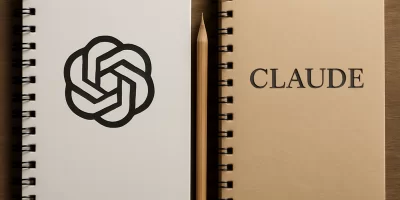
ChatGPT vs Claude
ChatGPT and Claude overlap as general-purpose AI assistants, but the right choice depends on the specific workflow, available tools, access plan, and the capabilities verified for your accou…

Local LLMs vs Cloud LLMs
Local LLMs offer greater control, privacy, and offline operation, while cloud LLMs provide easier access to larger models, managed infrastructure, and elastic scale; a hybrid approach often…

RAG vs Fine-Tuning
RAG is usually better for giving a model access to changing or private information, while fine-tuning is better for consistently shaping how a model responds or performs a specialized task.

NotebookLM vs Claude
NotebookLM is better suited to source-grounded research within a defined document collection, while Claude is more flexible for combining documents with web research, writing, coding, analys…

Midjourney vs Firefly
Midjourney is better suited to focused visual exploration and stylistic image work, while Adobe Firefly is a broader production ecosystem for image, video, audio, editing, Adobe integration,…

OpenAI API vs Anthropic API
OpenAI is the broader choice for applications combining language, image, audio, realtime, retrieval, and agent services, while Anthropic is a focused alternative for Claude-centered coding,…
Ollama vs LM Studio
Ollama is the stronger fit for terminal-based automation and reproducible serving, while LM Studio is better suited to graphical model exploration and visible runtime configuration.
Cursor vs GitHub Copilot
Cursor is a dedicated AI-first code editor suited to developers who want model choice and deeply integrated agent workflows, while GitHub Copilot is a broader coding-assistance service for e…